
Our technology
Technology designed to support clearer, more comfortable dental care.
Equipment is never the reason to choose a dental practice — the people and the care are. What good technology does is make examinations clearer, treatment planning easier to follow and some appointments more comfortable. Here is what we use, and what it may mean for you.
Only equipment in use at the practice is listed here. Whether any of it is used in your care is a clinical decision made with you after an assessment, and every technology has limits we will explain honestly.
Practice equipment last verified 2026-08-06.

iTero digital scanning
A handheld digital scanner that builds a 3D model of your teeth and gums on screen, instead of taking an impression with putty in a tray.
When we may use it
Used for clear aligner assessment and planning, and for selected restorative work such as crowns, bridges, veneers and night guards, where your clinician judges a digital scan appropriate.
What you may experience
The scanner wand is moved around your teeth over a few minutes. There is no impression material and nothing to set, and you can usually see the scan appear on screen as it is captured.
Potential benefits
- · May avoid the need for conventional impression material in appropriate cases
- · Scans can be shown to you on screen, so planning is easier to follow
- · Records are stored digitally and can be re-used for planning and comparison
Where it may be relevant
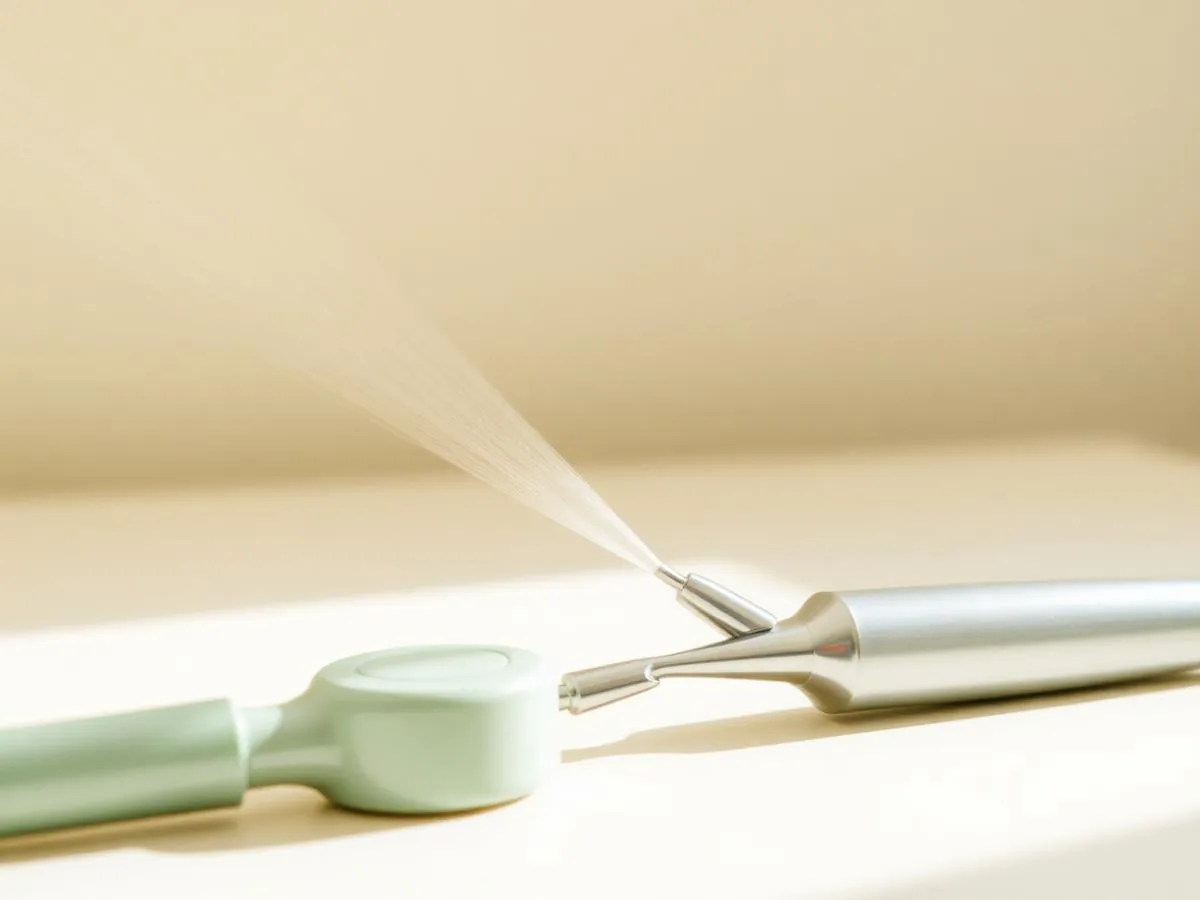
EMS Airflow Guided Biofilm Therapy
An EMS Airflow unit used as part of Guided Biofilm Therapy: warm water, air and a fine powder are directed at the tooth surface to remove plaque biofilm and staining.
When we may use it
Used during hygiene appointments where your clinician considers it suitable, including as part of gum health care and maintenance around implants, crowns and veneers.
What you may experience
Most patients describe it as a fine spray of warm water rather than scraping or vibration. A disclosing solution may be used first so plaque is visible and can be shown to you.
Potential benefits
- · Often more comfortable than scaling alone for patients who find hygiene visits difficult
- · Removes plaque biofilm and surface staining, including just below the gumline
- · Plaque is made visible first, so you can see where home cleaning needs attention
Where it may be relevant

Digital x-rays
Radiographs (x-rays) captured digitally in the surgery and displayed on the screen beside you, rather than on film.
When we may use it
Taken only where clinically required — for example to assess decay between teeth, bone levels, root canal anatomy, wisdom teeth or a tooth causing pain — and following current radiography guidance.
What you may experience
A small sensor is placed in or beside your mouth and the image appears on screen within seconds. Your clinician can then talk you through what the image shows.
Potential benefits
- · Images appear on screen quickly, so findings can be discussed during the same appointment
- · Digital capture removes the need for chemical film processing
- · Images can be enlarged and stored, which helps when comparing changes over time
Where it may be relevant

Straumann implant components
A dental implant system — the titanium implant and its matching components — manufactured by Straumann and used for implant cases placed and restored at the practice.
When we may use it
Used in implant treatment where an assessment, including imaging, shows implants are an appropriate option for you.
What you may experience
The system itself is not something you experience directly. What it means for you is that your implant uses documented, widely used components, with parts that can be identified and matched if your restoration ever needs attention.
Potential benefits
- · Components are documented and widely used, which helps with long-term maintenance
- · Restorative parts can be matched to your implant record in future
- · Planning and restoration use one consistent system
Where it may be relevant
Not sure what applies to you?
You do not need to decide any of this in advance. Book an examination and your clinician will explain which of these are relevant to your teeth, and which are not.
Book an appointment
Book directly into our diaries online, or ask us a question first — we're happy to help.